Treating Dissociative Disorders
Evidence-Based Individual Therapy
Supportive, trauma-informed therapy for dissociation focused on helping you feel safer, steadier, and more connected to yourself.

Start Therapy Sooner


Virtual & In-Person Sessions

Thoughtful, Collaborative Care

Dissociation Can Feel Like:
Feeling disconnected from yourself, your emotions, or the world around you in ways that are difficult to explain
Moving through parts of the day feeling detached, foggy, unreal, or emotionally distant
Feeling like you’re “going through the motions” without fully feeling present or connected
Losing track of time, feeling mentally checked out, or struggling to remember parts of conversations or experiences
Feeling frustrated or confused by shifts in emotions, reactions, or ways of coping that don’t fully make sense to you
Wanting to feel more connected and grounded, but being unsure how to get there
Struggling to feel fully safe, settled, or connected in relationships or everyday situations
Feeling isolated because these experiences can be difficult to describe or may not feel understood by others
Dissociation can make it difficult to feel fully connected to yourself, your emotions, or the world around you.
There are ways to start feeling more like yourself again. At ALPS, we use a range of therapy approaches to help you get there.
-
Rather than trying to eliminate painful thoughts or emotions, ACT helps you respond to them differently. You learn how to step back from unhelpful patterns and focus your energy on what’s important to you. Even when things feel difficult, the goal is to keep moving toward a life that feels more meaningful and fulfilling.
-
IFS helps you better understand the different “parts” of yourself that may hold emotions, reactions, beliefs, or coping patterns shaped by past experiences. Rather than viewing these parts as problems to eliminate, this approach focuses on understanding them with greater curiosity and compassion while strengthening your ability to feel more grounded and connected to yourself as a whole. Over time, IFS can help reduce internal conflict, improve emotional regulation, and create a greater sense of clarity, balance, and self-understanding.
-
Sensorimotor Psychotherapy focuses on the connection between the mind and body, especially how stress and difficult experiences can become stored physically over time. This approach helps you notice patterns in emotions, physical sensations, and automatic reactions while developing tools to feel more grounded and regulated. Rather than focusing only on talking through experiences, therapy also works with the body’s responses to help create a greater sense of safety, stability, and connection to yourself.

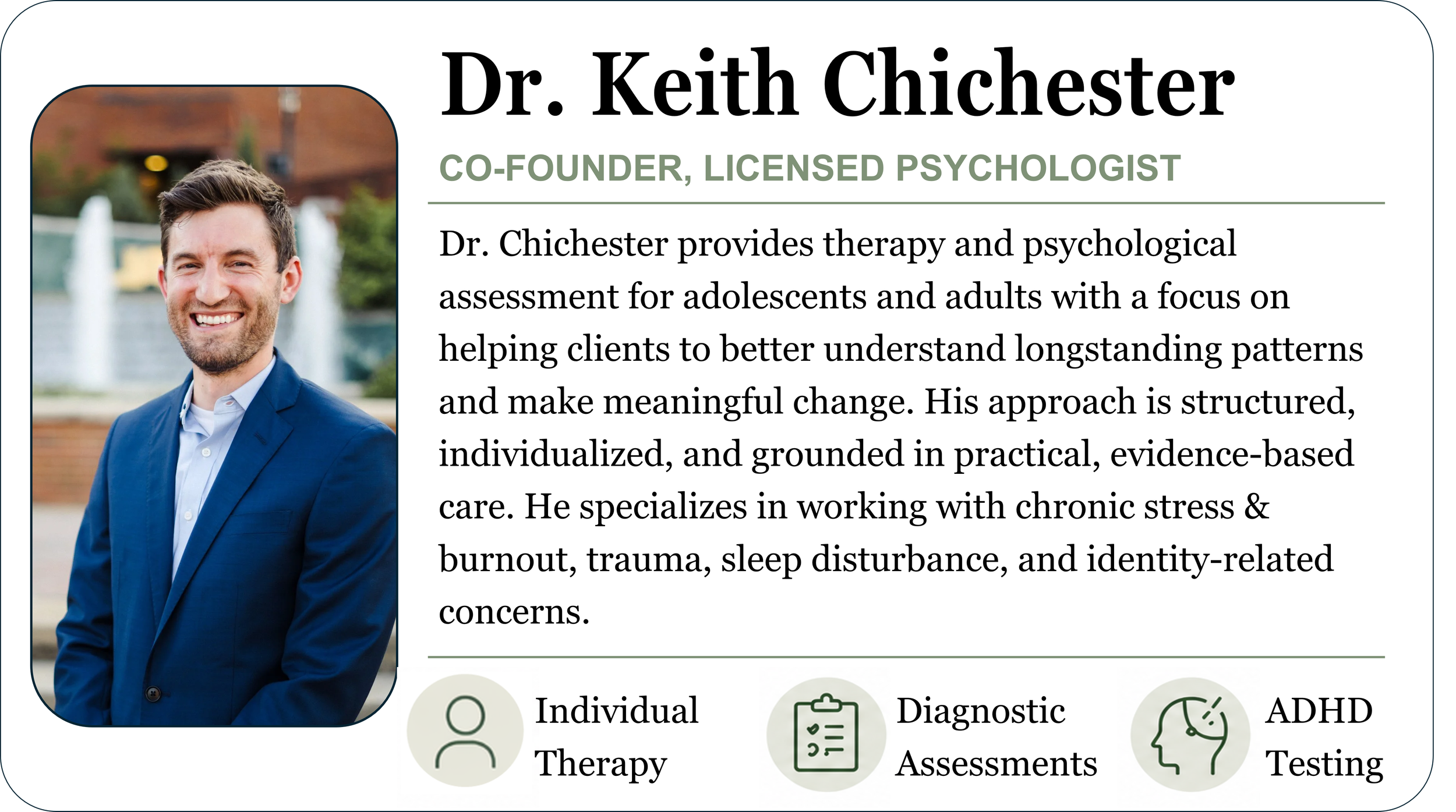
ALPS Providers Who Treat Dissociation